
Independence did not end injustice.

by Demond Hawkins, President, NAACP Eugene-Springfield
“Is this America, the land of the free and the home of the brave?”
— Fannie Lou Hamer
As we approach Independence Day, many people are readying to celebrate the courage of those who stood against injustice and demanded freedom from a government they believed no longer represented them.
The American colonies declared independence because they believed they were being denied representation, dignity, fairness, and the ability to shape their own future. They protested taxation without representation, abuse of power, militarized control, unequal treatment under the law, and a government that ignored the cries of the people. Eventually, they went to war over the belief that liberty belonged to ordinary people, not just the wealthy or politically connected.
Independence did not end injustice.
— Demond Hawkins
The newly formed United States continued patterns of exclusion, violence, and colonization. Perhaps this is one of history's enduring lessons: people shaped by domination and exploitation are not automatically protected from reproducing those same systems. A young nation born from the wounds of violence struggled to resist carrying those wounds forward. The oppressed became capable of oppression. And generation after generation, communities have continued asking America to extend the promises of liberty and justice more fully.
People of many races helped fight for the independence of the United States from Britain, even while many of them were denied full humanity themselves. Men like Crispus Attucks, often remembered as the first martyr of the American Revolution; James Armistead Lafayette, whose intelligence work helped secure victory at Yorktown; and countless free and enslaved Black Americans, Indigenous people, immigrants, and poor laborers all contributed to the birth of this nation.
That struggle continued long past 1776. It continued through abolitionists demanding the end of slavery. Women demanding the right to vote and through labor movements demanding dignity for workers. The Civil Rights Movement demanding equal protection under the law. Today, it continues in communities speaking out against injustice in immigration enforcement, attacks on voting rights protections, unequal policing, poverty, failing schools, housing inequities, healthcare disparities, mass incarceration, and the racial wealth gap built through generations of discriminatory policy.
The voices rising today are woven deeply into the American story. Frederick Douglass once asked, “What, to the American slave, is your Fourth of July?” not to reject the ideals of America, but to expose the contradiction between its promises and its practices. Dr. Martin Luther King Jr. later reminded the nation that the Declaration of Independence and Constitution were a “promissory note” guaranteeing the rights of all people, one America had yet to fully honor for Black citizens.
And many communities of color, particularly Black communities rooted deeply in faith, have consistently called the U.S. toward repentance — toward justice, compassion, humility, and reconciliation. For generations, many have warned that ignoring the suffering of entire communities weakens our moral foundation.
James Baldwin warned that “Not everything that is faced can be changed, but nothing can be changed until it is faced.” Some attempt to frame protest, truth-telling, or demands for justice as radical or divisive, but history teaches us otherwise. The very foundation of independence was built on a demand that government live up to its moral obligations to the people.
“Not everything that is faced can be changed, but nothing can be changed until it is faced.”
— James Baldwin
At the Eugene-Springfield NAACP, we believe there is still hope because our story has never only been about oppression. Our history has also been about ordinary people having the courage to challenge it. And we believe that Civil Rights reclamation can begin right here in our own communities, because every generation inherits the responsibility to decide what freedoms will exist and expand for the next
Civil Rights reclamation can begin right here in our own communities, because every generation inherits the responsibility to decide what freedoms will exist and expand for the next
— Demond Hawkins
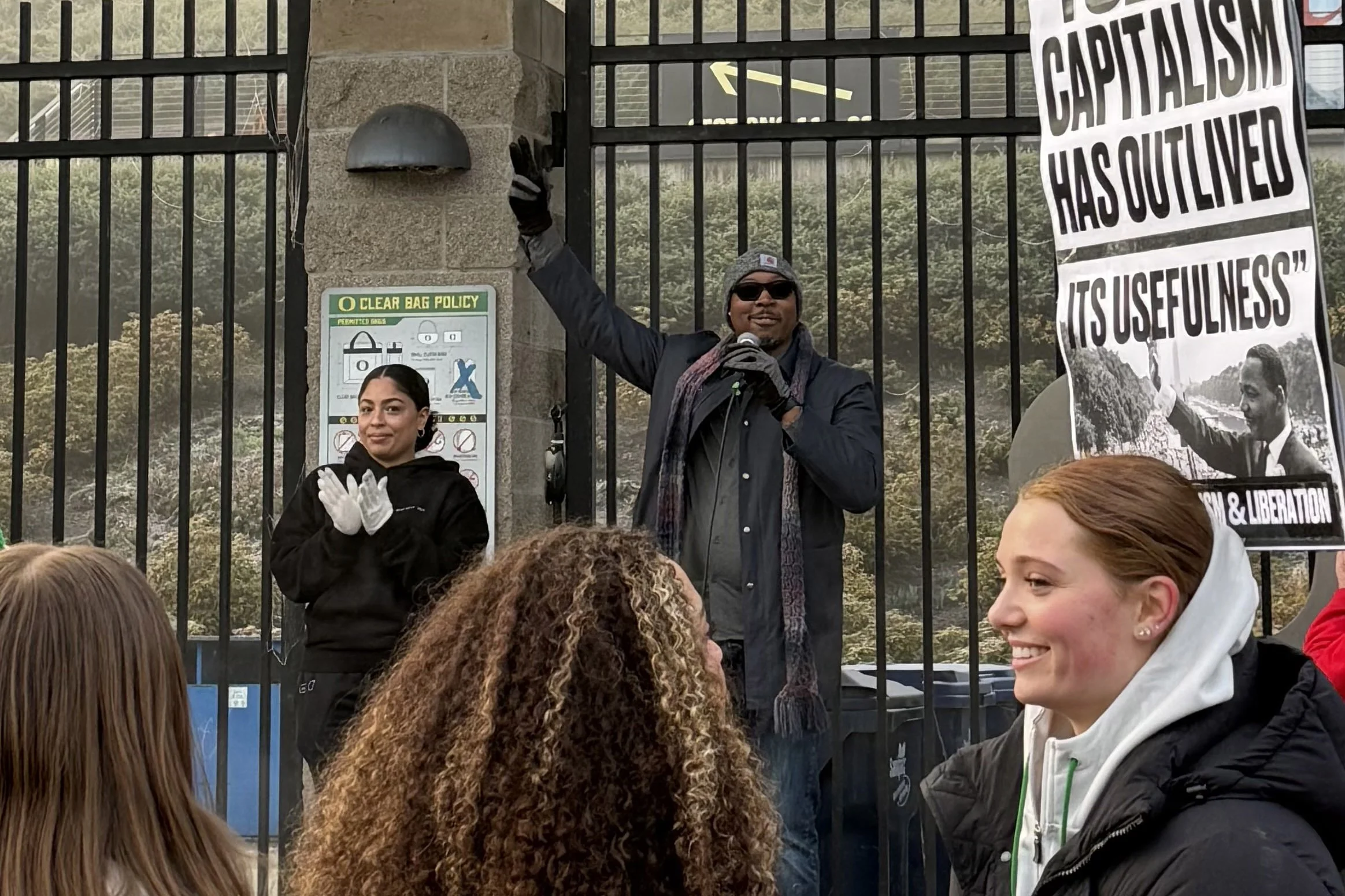
Public domain images of Frederick Douglass, James Baldwin, Civil Rights Marches, Voting Rights, Dr. Martin Luther King Jr., from Wikimedia Commons.
Three Ways to Get Involved
Understand how voting rights affect representation, public policy, and community resources.
Become an NAACP member, attend a meeting, bring a friend, and participate in community conversations.
Support voter outreach, share accurate information, and help strengthen participation in your community.